

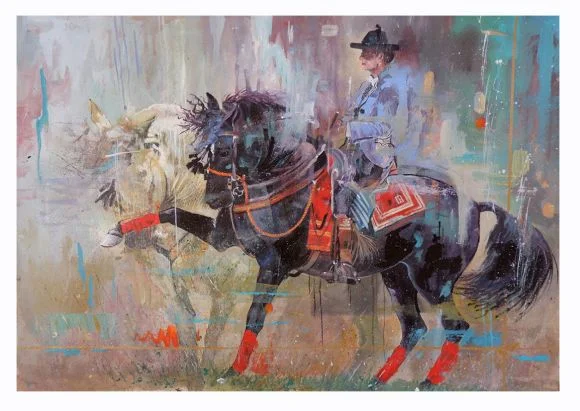
Horse Painting, Equestrian Art and Famous Equestrian Paintings
Throughout art history, the horse has been a powerful subject — not simply as an animal but as a symbol of movement, strength, nobility, and human-animal partnership. Horse imagery has occupied ancient reliefs, Renaissance stables of great masters, military portraits, and modern gallery walls. In the world of fine art today, horse painting continues to captivate collectors and casual viewers alike.
This article answers common questions about equine art and how it functions within visual culture, design, and artistic expression.
What Is the Role of Equestrian Art in Visual Culture?
Equestrian art documents more than the physical presence of horses; it captures narrative, status, and motion. Equestrian wall art emphasizes the elegance of equine form while also reflecting cultural values — whether depicting leisure, power, sport, or historical legacy.
Unlike still-life or portraiture, equestrian compositions demand mastery of anatomy, perspective, and implied movement. These works invite viewers not only to observe but to imagine sound, speed, and presence.
Why Is “Painting Napoleon on Horse” Still a Recognizable Theme?
The theme of painting Napoleon on horse originates from the tradition of representing authority through equestrian portraiture. Monarchs and military leaders were historically immortalized astride horses to signify command, strategic prowess, and heroic narrative.
These paintings weren’t realistic documentations alone; they were visual messages crafted to establish legacy. Today, that tradition influences how artists balance historical storytelling with artistic interpretation — blending factual likeness with emotional resonance.
Equestrian subjects of this nature continue to inspire both historical appreciation and contemporary reinterpretation.
What Distinguishes Acrylic Horse Painting from Other Techniques?
Acrylic horse painting represents a modern approach to equine art, where artists leverage acrylic’s quick-dry characteristics without sacrificing texture or expressive depth. Acrylic allows vivid colour layering, dynamic brushwork, and sharper contrast than some oil techniques, while also drying faster and maintaining surface clarity.
Many contemporary artists favor acrylic for its adaptability — it supports bold movement representation and can range from photorealistic to gestural abstraction. This flexibility makes acrylic particularly effective for depicting the energy and motion inherent in equine subjects.
How Does Equestrian Wall Art Fit in Modern Interiors?
Equestrian wall art plays a significant role in interior décor for spaces seeking both strength and sophistication. These artworks function at multiple levels:
-
Aesthetic focal point: Strong visual presence anchors a room
-
Symbolic resonance: Associations with heritage and movement
-
Emotional narrative: Implied action engages the viewer
-
Design harmony: Works balance energy with structural rhythm
Modern interiors often employ equestrian pieces to introduce controlled motion and presence without overwhelming other design elements.
Which Works Are Considered Famous Equestrian Paintings?
When collectors reference famous equestrian paintings, they usually mean works that showcase:
-
Dynamic anatomy — Horses portrayed in motion or stance
-
Historical significance — Royal, military, or cultural figures
-
Technical mastery — Accurate musculature and perspective
-
Narrative weight — Works that convey more than mere resemblance
While traditional masterpieces established the template for equestrian representation, contemporary interpretations now reflect diverse stylistic approaches — from classical realism to expressive abstraction.
That evolution continues to expand the way viewers engage with equine art today.
What Makes Horses an Exceptional Subject for Artists?
Horses are complex, dynamic, and structurally intricate. They present unique challenges and opportunities:
-
Muscular architecture: Rendering tension and flexion
-
Movement: Depicting gallop, canter, stillness with rhythm
-
Light interaction: Reflective surfaces and texture variation
-
Symbolic capacity: Freedom, strength, relationship with humans
These elements make horses a rewarding subject for artists seeking both technical precision and expressive power.
Why Do Collectors Value Equestrian Art?
Collectors appreciate equestrian art for several reasons:
-
Technical depth: Successful works require observant structure
-
Timeless appeal: Horse themes resonate across cultures
-
Narrative richness: Single image conveys motion and metaphor
-
Decorative versatility: Suits classic, contemporary, and hybrid spaces
Collectors don’t just buy visuals — they invest in the emotional and historical threads woven into equestrian imagery.
How Should Buyers Evaluate a Horse Painting?

When considering a horse painting, buyers can pay attention to:
-
Anatomical credibility: Does the horse’s form feel alive?
-
Expression and mood: Does the work communicate emotion?
-
Medium and technique: Are brushwork and texture purposeful?
-
Composition and balance: Does the horse interact harmoniously within its space?
-
Narrative potential: Does the piece invite engagement beyond surface imagery?
These criteria support both aesthetic satisfaction and collector confidence.
How Does Equestrian Art Build Emotional Connection?
Great equine art succeeds because it bridges perception and empathy. Viewers project motion, personality, and story onto the subject. A galloping horse might evoke freedom. A still horse might reflect calm resilience. This emotional resonance is part of what elevates equestrian works beyond simple representation.
Whether viewed in galleries, online platforms, or personal spaces, equestrian art engages visual literacy and emotional reflection simultaneously.
Can Equestrian Art Be Both Decorative and Conceptually Significant?
Absolutely. Modern equine artworks do more than adorn walls; they serve as conceptual touchstones. Through colour, movement, and form, artists invite viewers to reflect on:
-
Human-animal connection
-
Motion and time
-
Cultural heritage
-
Power and vulnerability
This dual function — aesthetic appeal and conceptual depth — is why equestrian paintings continue to hold artistic relevance.
Why Horse Painting Is Neither Old-Fashioned Nor Obsolete
Contrary to assumptions that equestrian art belongs to the past, horse imagery evolves with artistic practice. From traditional representational techniques to contemporary abstractions and experimental brushwork, equine subjects remain adaptable to new visual languages.
In 2026 and beyond, horse paintings persist not because of tradition alone, but because of their ability to convey energy, presence, and narrative in ever-fresh visual forms.
Final Thought: The Lasting Legacy of Equestrian Art
Equestrian art bridges centuries of artistic evolution. From the earliest historical depictions to modern galleries and digital collections, horses have remained compelling subjects. Today, equine works continue to inspire technical innovation, emotional engagement, and meaningful collector interest.
Whether created in acrylic, oil, or mixed media, horse paintings reflect an ongoing dialogue between artist, subject, and viewer — one that continues to enrich the landscape of fine art.