

20 Beautiful and Famous Landscape Paintings from Around the World
Landscapes have captured the human imagination for centuries. Whether rendered as lush countryside scenes, evocative sunsets, or spiritual vistas, landscape paintings communicate mood, place, and meaning beyond mere representation. Famous landscape artworks inspire both collectors and casual viewers, inviting us to explore distant horizons and emotional depths.
In this guide, we highlight 20 of the most admired landscape paintings from across the globe — works that shaped artistic history and continue to influence contemporary practice. The categories below reflect the richness of visual interpretation, from abstract landscape painting to celebrated sunset painting and expressive masterpieces rooted in philosophical and spiritual narrative.
What Is an Abstract Landscape Painting and Why Does It Matter?
One of the most innovative approaches to scene and space is the abstract landscape painting. Rather than depicting a place literally, abstract landscapists use colour, form, and gesture to evoke the emotional resonance of a place. These works often challenge the viewer to feel the landscape rather than just see it.
Abstract landscape works capture the mood of nature — from stormy atmospheres to serene expanses — using expressive visual language. They are as much about perception as they are about composition.
Why Do Sunset Paintings Captivate Audiences?
Sunset painting is a genre that combines dramatic lighting with evocative emotion. The moments when day meets night offer powerful colour shifts — golden hues, deep purples, and glowing reds — that stir both visual and emotional response.
Sunsets have been a favorite subject for landscape artists because they represent transition, beauty, and a fleeting moment in time. Whether rendered realistically or expressed through impressionist brushwork, sunset artworks remain among the most beloved landscape pieces in art history.
How Do Religious Landscape Paintings Communicate Spirit Through Nature?
In many historical and cultural contexts, the natural world serves as a backdrop to spiritual narrative. Religious painting places often depict landscapes infused with sacred meaning — hillsides of pilgrimage, river valleys of ritual, and skies imbuing transcendence.
These works create visual harmony between divine narrative and familiar environment AAMAX, often making the landscape itself feel sacred. They resonate with viewers by connecting spiritual symbolism with the natural world.
What Makes an Expressionist Masterpiece in Landscape Painting?
An expressionist masterpiece pushes beyond representation to convey emotional intensity. Expressionists use exaggerated colour, distorted form, and dynamic brushwork to communicate inner experience rather than physical accuracy.
In landscape contexts, this results in works that feel energetic, emotional, and deeply personal. Often, such paintings achieve a sense of universal feeling — viewers sense turbulent skies, reflective waters, or dramatic terrain not through realism, but through expressive force.
How Do Landscape Paintings Evolve Across Time and Place?
The term landscape paintings encompasses a vast tradition from pastoral scenes of the 17th century to contemporary experimental works. Historically, landscapes moved from being secondary backgrounds to foreground subjects — fully worthy of artistic focus.
Early landscapes often celebrated nature’s harmony, while later works explored emotional depth, industrial contrast, or spiritual interpretation. Today, landscapes continue to evolve, integrating abstraction, conceptual art, and cultural narrative.
How Are the Most Famous Paintings Defined?
The notion of famous paintings spans both historical significance and public awareness. Many landscape works are recognised not only for artistic innovation but for cultural impact — appearing in textbooks, museums, and global conversation.
Below are 20 beautiful and influential landscapes that exemplify the diversity of global artistic expression.
Iconic Landscape Works You Should Know
1. Impression, Sunrise — Claude Monet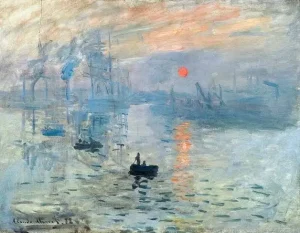
A defining work of Impressionism, this painting captures light’s transience over water. Impression, Sunrise by Claude Monet conveys the emotional experience of watching a sunrise over a harbor more than it conveys the visual experience. It is an Impressionist painting that was controversial when it was first displayed.
2. The Starry Night — Vincent van Gogh
Although night sky is central, the rolling hills and expressive brushwork create a landscape of emotion.
3. Wanderer above the Sea of Fog — Caspar David Friedrich
A solitary figure overlooking dramatic terrain, introspection.
4. The Hay Wain — John Constable
A pastoral English scene blending human activity with natural rhythm.
5. View of Toledo — El Greco
An early expressive interpretation of stormy skies and dramatic terrain.
6. Rain, Steam and Speed — J.M.W. Turner
Captures the power of industrial revolution but rooted in landscape atmospheric study.
7. The Oxbow — Thomas Cole
A panoramic American landscape blending wilderness and cultivated land.
8. The Fighting Temeraire — J.M.W. Turner
A sunset landscape that evokes nostalgia and historical narrative.
9. Mountains and Sea — Helen Frankenthaler
Abstract landscape that emphasises colour field and relationship to nature.
10. The Monk by the Sea — Caspar David Friedrich
Influential for its minimal composition and emotional stillness.
11. The Great Wave off Kanagawa — Hokusai
Though technically a print, this wave-dominated seascape is a global landscape icon.
12. Christina’s World — Andrew Wyeth
A rural American landscape that evokes isolation and quiet beauty.
13. Wheatfield with Crows — Vincent van Gogh
A dramatic landscape suggesting emotional intensity through colour and pattern.
14. Nighthawks — Edward Hopper
Although urban, its interplay of light and openness reflects landscape sensibility.
15. Broadway Boogie Woogie — Piet Mondrian
Abstract landscape interpretation through line and colour grid.
16. Sunday Afternoon on the Island of La Grande Jatte — Georges Seurat
A pointillist landscape highlighting leisure and spatial structure.
17. Landscape with the Fall of Icarus — Pieter Bruegel
Blends mythological narrative with vast terrain.
18. Peaceful Place — Modern landscape works emphasizing harmony and simplicity.
19. Desert Skies — Contemporary landscape invoking emptiness and space.
20. Forest Canopy — Modern interpretive work focused on light and layering.
What Do These Landscapes Reveal About Art and Perception?
Each work tells us something about how artists perceive the world. Whether it’s the fleeting light in a sunset painting, the emotional surges of expressionist colour, or the spiritual terrain of a religious painting, landscapes act as a mirror to human experience.
These paintings shape how viewers understand space, emotion, and narrative. Because landscapes move beyond literal geography into perceptual depth, they resonate across cultures.
What Connects These Works Across Time?
Despite differences in style, medium, and era, great landscapes share a common thread: they make the viewer feel seen. They do not merely depict scenery. They reveal emotion, context, and relational experience.
From traditional representation to abstract landscape painting, from historical mythos to modern interpretation, each work invites contemplation.
Conclusion: Why Landscape Painting Continues to Inspire
Beautiful and famous landscape paintings remain relevant because they bridge observation and emotion. They remind us that nature, memory, light, and space are not static — they are lived, remembered, and felt.
As artistic practices evolve, landscapes adapt while retaining their power to move, challenge, and enrich our visual experience.
Whether you are a collector, creator, or casual viewer, these works offer insight into how art captures the world — not just as it appears, but as it feels.
There’s something magical about landscape paintings. They transport us to distant lands, capture the beauty of nature, and evoke deep emotions. Whether it’s a serene countryside, a dramatic stormy sky, or a surreal dreamscape, landscapes have been an eternal muse for artists across cultures and eras.
The Origins of Landscape Painting
Early Beginnings
Before landscape painting became a standalone genre, artists in ancient civilizations included nature as part of their larger compositions. Greek and Roman murals often featured lush gardens, rolling hills, and scenic backgrounds.
Medieval Period
During the medieval era, landscape art was largely symbolic, often appearing in religious paintings. It wasn’t until the Renaissance that landscapes truly gained prominence.
The Golden Age of Landscape Painting (16th – 19th Century)
The Renaissance Influence (16th Century)
Artists developed linear perspective and started paying closer attention to the natural world. Leonardo da Vinci and Albrecht Dürer created intricate landscape studies.
Dutch Golden Age (17th Century)
In the 17th century, artists like Jacob van Ruisdael depicted rolling countryside, windmills, and dramatic cloudscapes with meticulous detail.
Romanticism (18th – 19th Century)
The Romantic movement took landscapes to an emotional level, with artists like Caspar David Friedrich and J.M.W. Turner using dramatic skies and misty mountains.
The Evolution of Landscape Art in Modern Times (19th – 20th Century)
Impressionism and Post-Impressionism
Impressionists like Claude Monet captured fleeting moments of light and color, while Post-Impressionists like Vincent van Gogh added intense emotion to landscapes.
Abstract and Contemporary Landscapes
Artists like Georgia O’Keeffe used abstraction to depict nature in unexpected ways, while contemporary artists explore digital techniques and surreal elements. The Symbolism Behind Famous Landscape Paintings
Nature as a Reflection of Emotion
Landscapes have long been used to mirror human emotions, from stormy seas symbolizing turmoil to peaceful meadows representing nostalgia.
Spiritual and Philosophical Themes
Taoist philosophy influenced Chinese shan shui paintings, while Romantic painters used landscapes to express nature’s overwhelming beauty and power.
Landscapes in Film and Design
From epic scenery in movies to nature-inspired home décor, landscape art continues to influence visual culture today. Many landscape photographers and digital artists draw inspiration from classic landscape paintings. Inspiration for Photography and Digital Art